Translating behavioral research into an AI driven product concept
Industry
Education · Productivity · AI
Duration
2 Months Thesis - 1 Month Project
Tools
Figma · Framer · Research interviews · UX frameworks
SAMBA is an AI-powered product concept designed to help students manage academic workload, reduce procrastination, and stay focused across studies and daily life.
The project explored how AI can support attention management by centralizing tasks, deadlines, and learning materials into one intelligent system. My focus was on defining the problem space, validating user needs, and designing a clear, scalable product experience.
The Challenge
Students struggle with procrastination and stress due to cognitive overload, fragmented tools, and difficulty breaking large academic tasks into actionable steps — especially under time pressure and during peak semester periods.
The Approach
Most students struggle not with completing tasks, but with starting them, often due to fear of failure or feeling overwhelmed.
Once a first step is taken students are significantly more likely to maintain momentum and follow through.
Large, undefined tasks increase avoidance, while clear, bite, sized actions reduce anxiety and cognitive load.
50% struggle with task-switching
83% report peak stress at semester deadlines
The Result
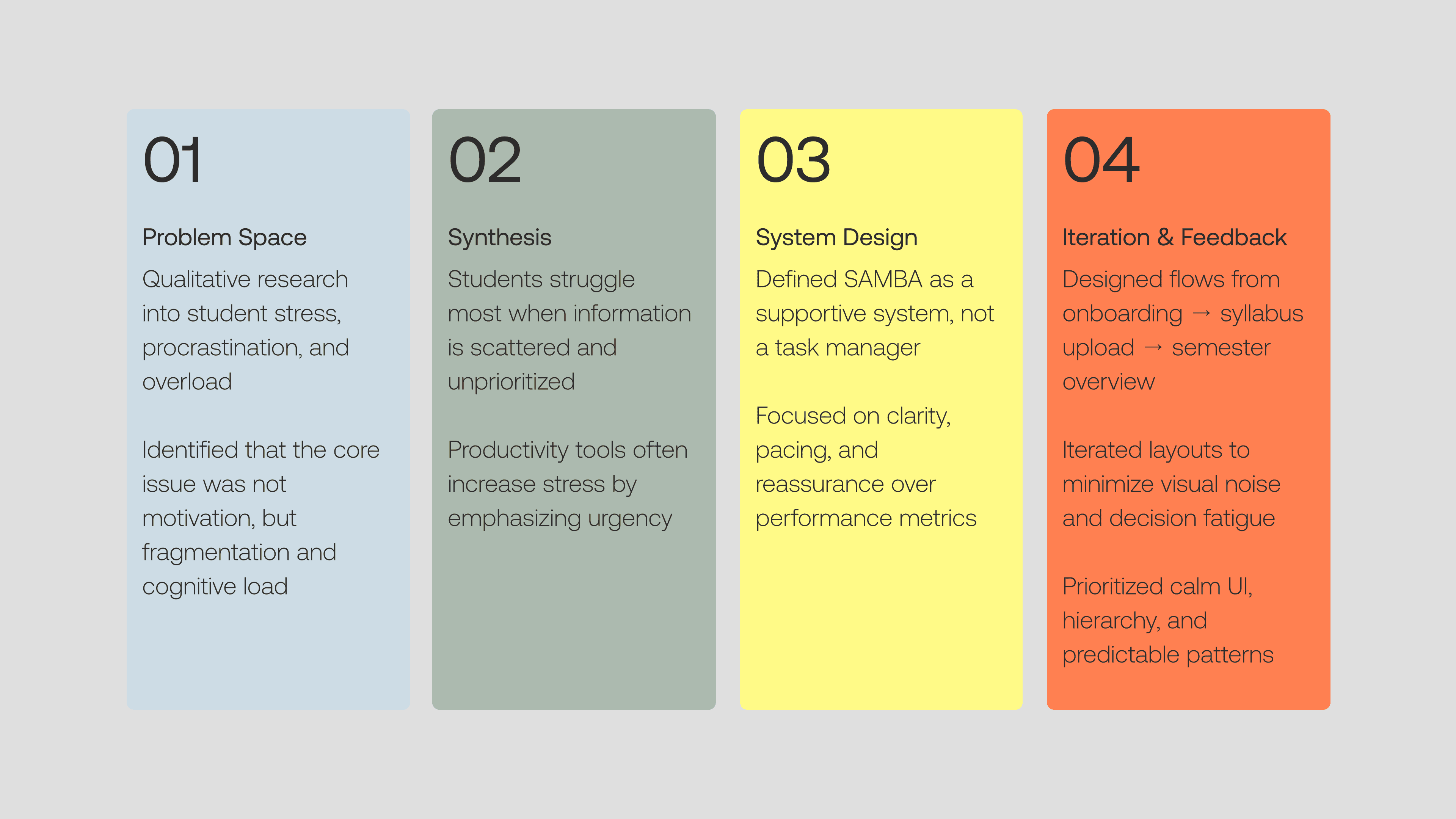
Grounded design decisions in qualitative interviews and surveys
Identified emotional and cognitive blockers behind procrastination
Translated research into clear product principles
Designed an AI system that supports users without overwhelming them
Prioritized trust, clarity, and control over automation hype
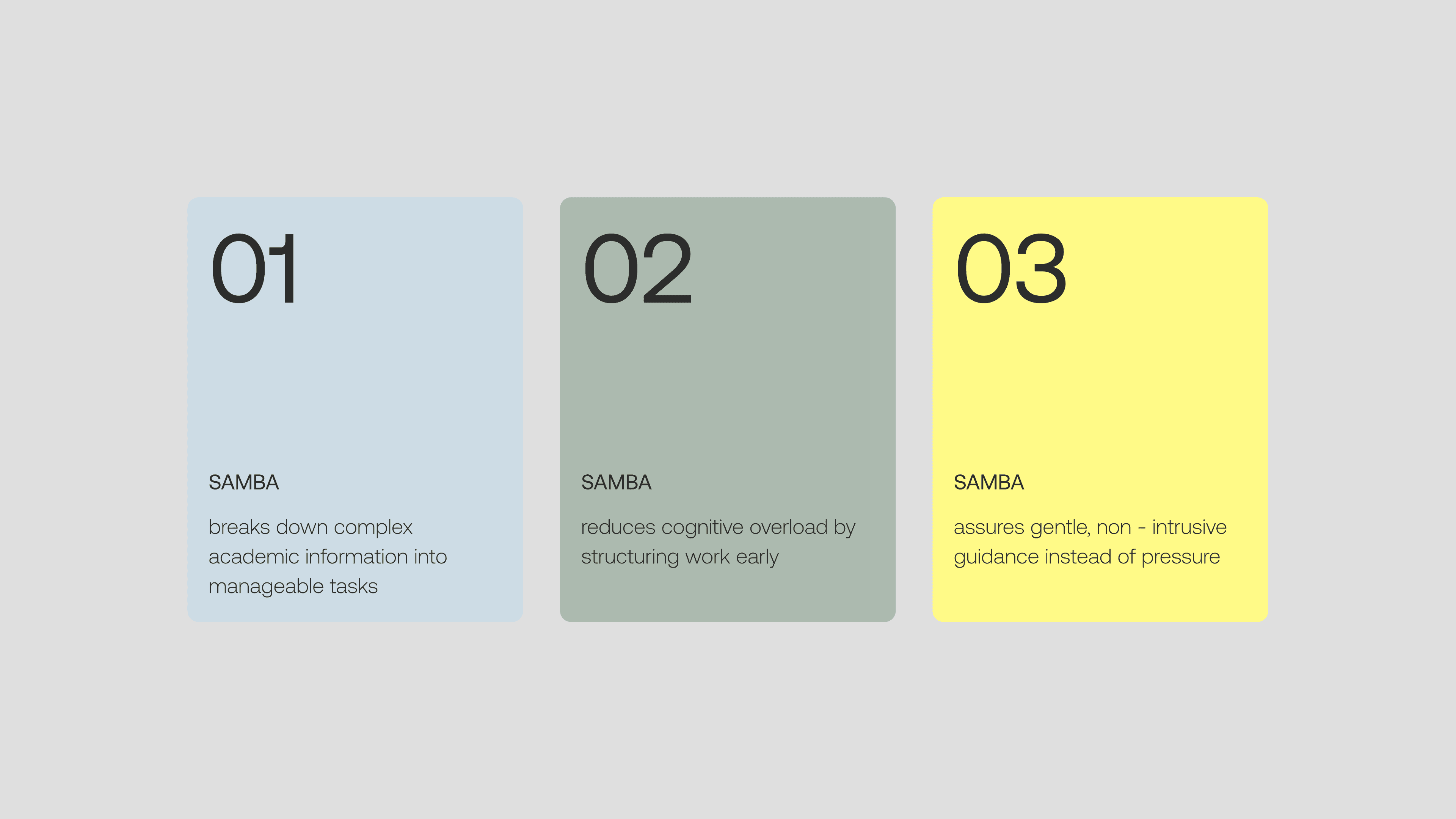
SOLUTION OVERVIEW
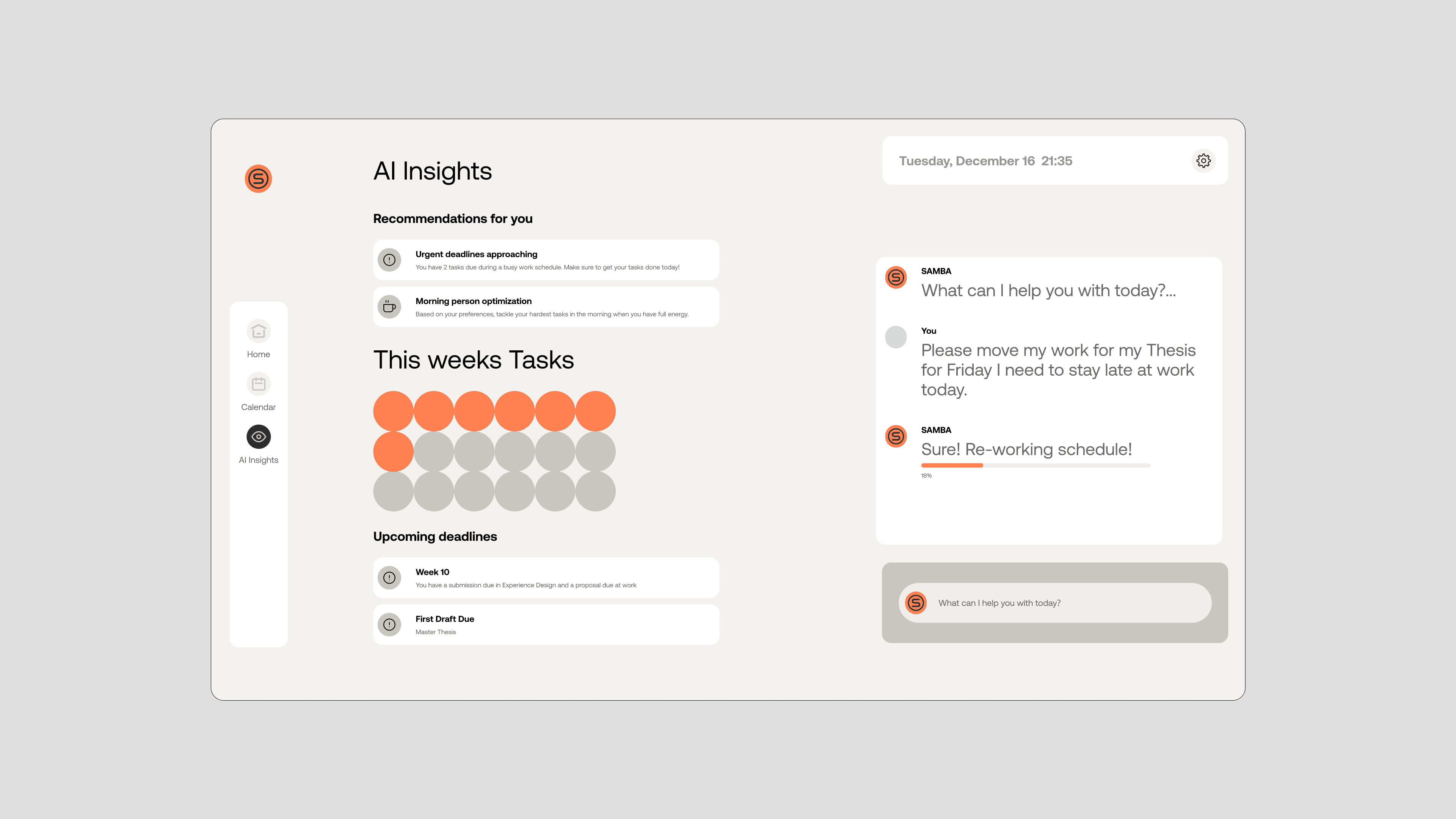
SAMBA is an AI-powered task management system that helps students:
Break down complex academic information into manageable tasks
Reduce cognitive overload by structuring work early
Receive gentle, non-intrusive guidance instead of pressure
The system focuses on early intervention, helping users avoid end-of-semester stress by creating clarity at the start.
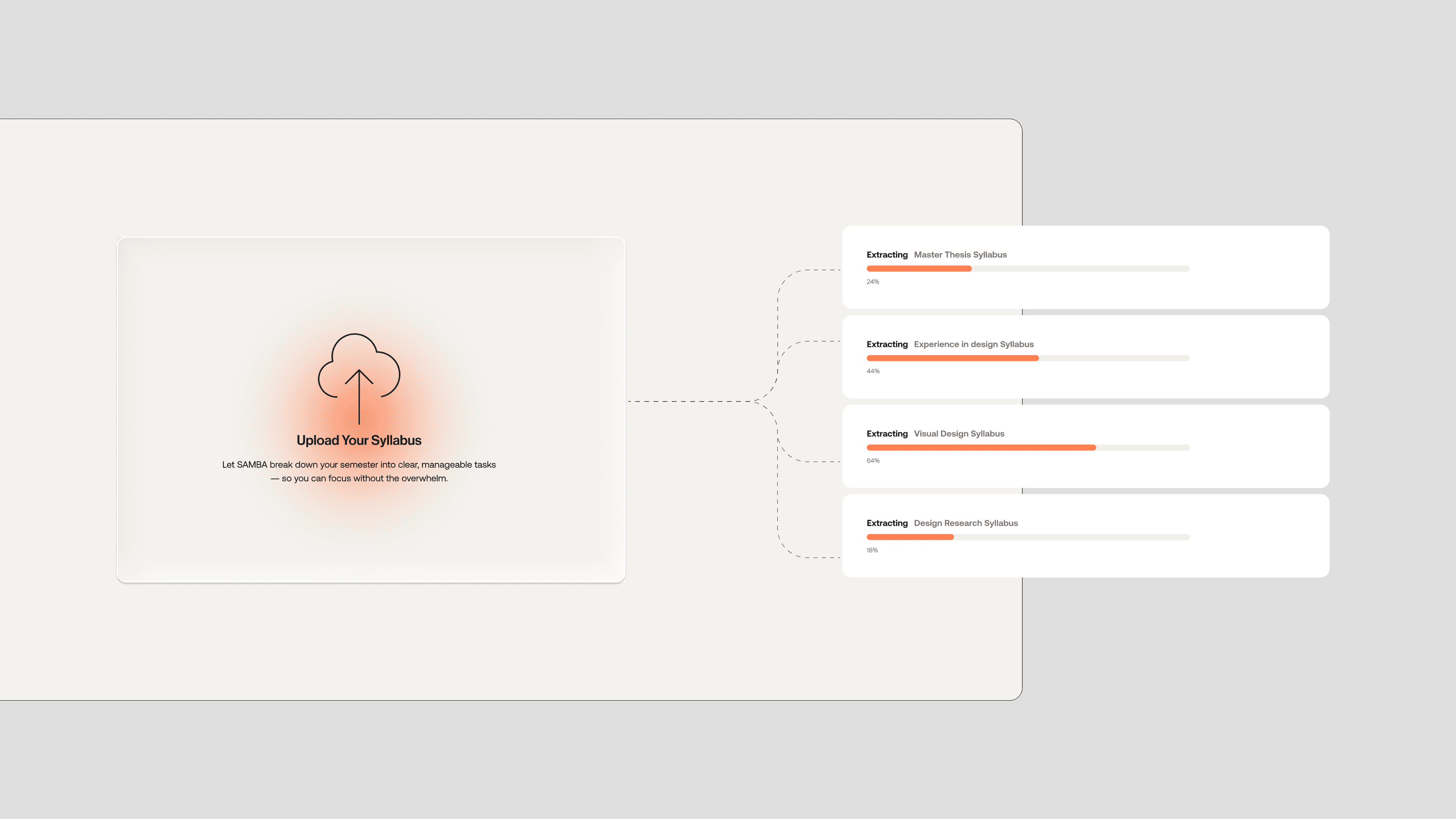
CORE FEATURE: AI TASK BREAKDOWN
Feature Highlight AI-powered syllabus parsing
Users upload course material
AI extracts deadlines, milestones, and tasks
Users retain control to edit, adjust, and confirm
UX Rationale
Reduces activation energy
Supports trust in AI through transparency
Aligns with research on task initiation and emotional regulation
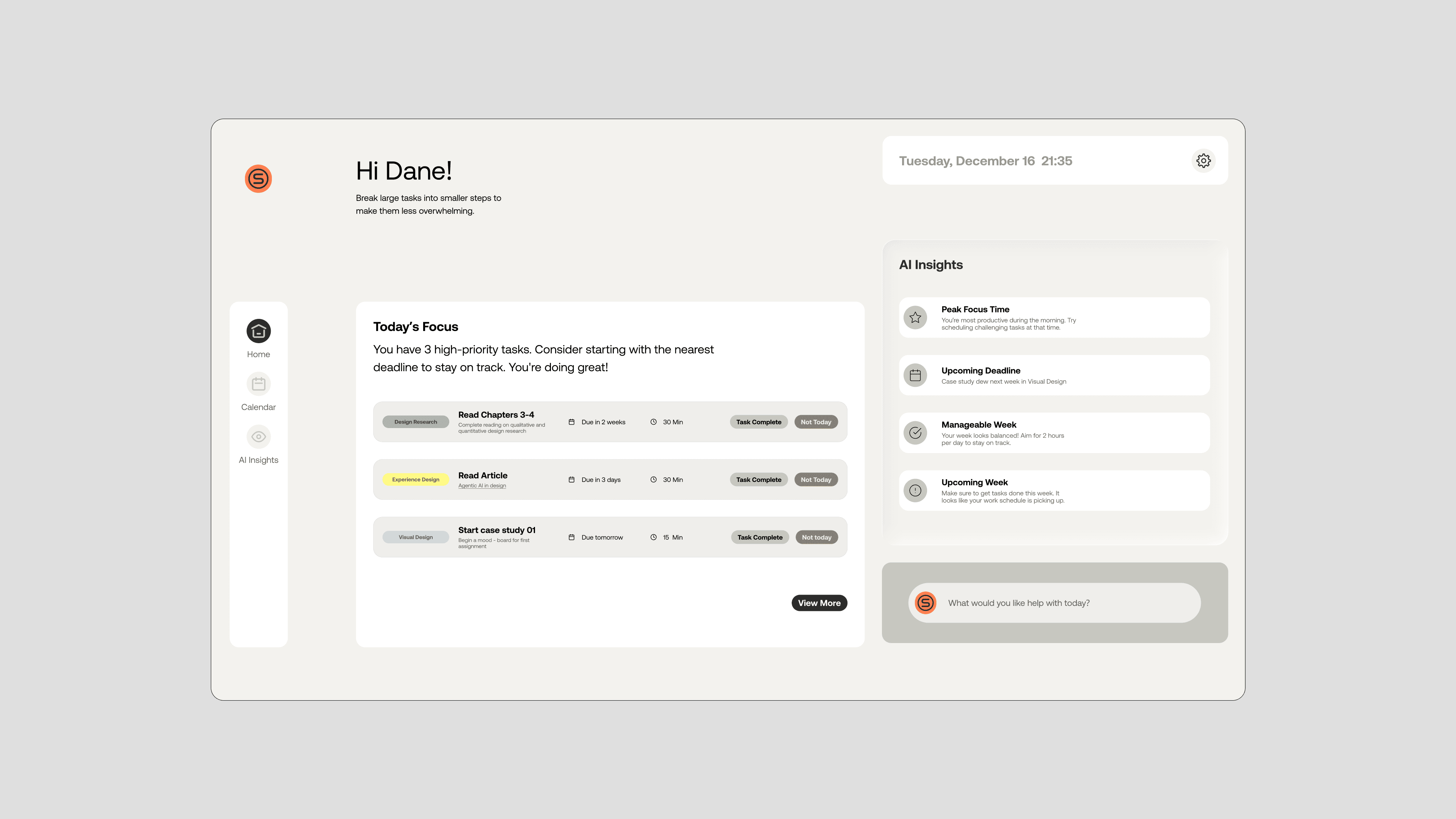
CORE FEATURE: FOCUS & PRIORITIZATION
Feature Highlight Daily focus mode
AI-prioritized tasks with time estimates
One-task-at-a-time structure
Optional focus music and timers
UX Rationale
Supports flow state
Reduces task-switching fatigue
Helps users feel progress instead of pressure
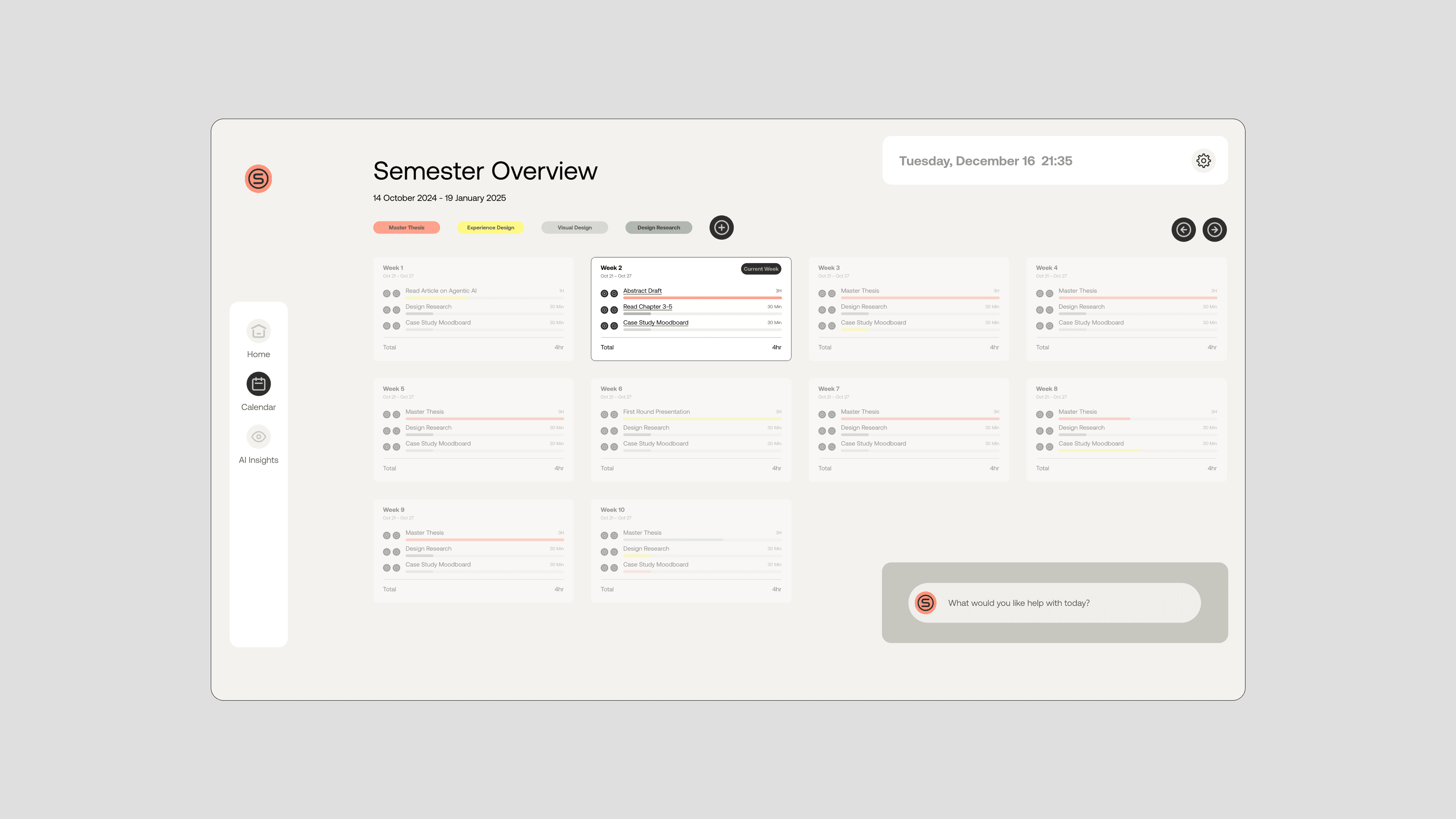
DESIGN PRINCIPLES
Minimal by default, customizable when needed
Calm, predictable interactions
Clear hierarchy and spacing to reduce overwhelm
Neuroinclusive UI patterns
AI as a support system, not a controller
OUTCOMES & LEARNINGS
Key Learnings
Emotional friction is as important as usability
AI systems require clear feedback and user control to build trust
Simplicity outperforms feature richness for stressed users
Designing for neurodiverse users improves usability for everyone
Product thinking benefits from combining UX research with system design
Final Remarks
SAMBA is a conceptual product developed as part of a Master’s thesis, designed to explore how AI can responsibly support focus, task management, and mental well-being. The project demonstrates my ability to translate research into product strategy, design scalable systems, and apply UX thinking to complex, emotionally driven problem spaces.

CET
Freelance Availability
15-20 Hours Per Week
